
 Français
 Deutsch
 Italiano
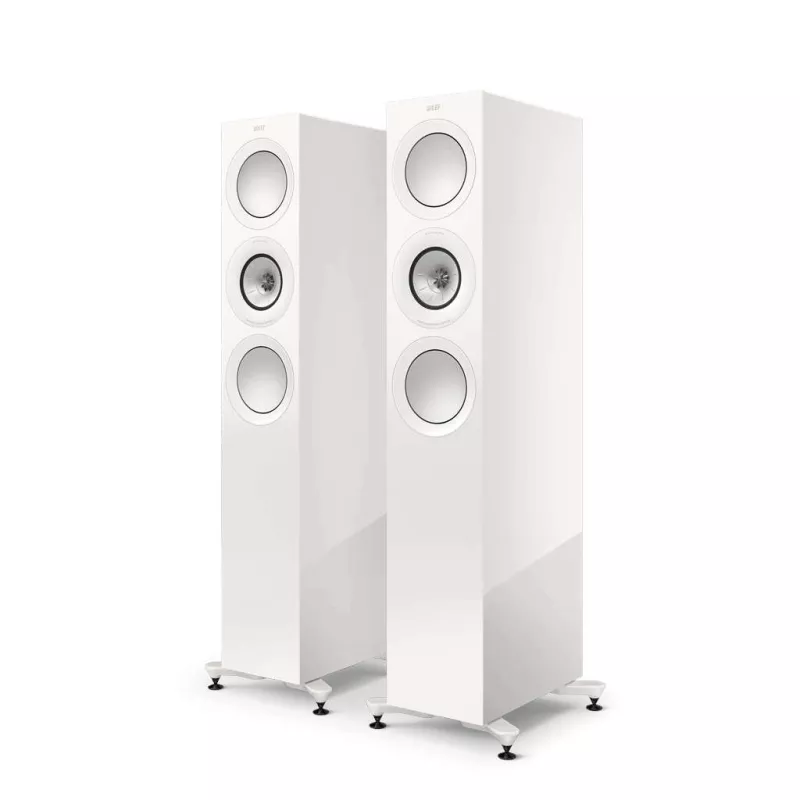
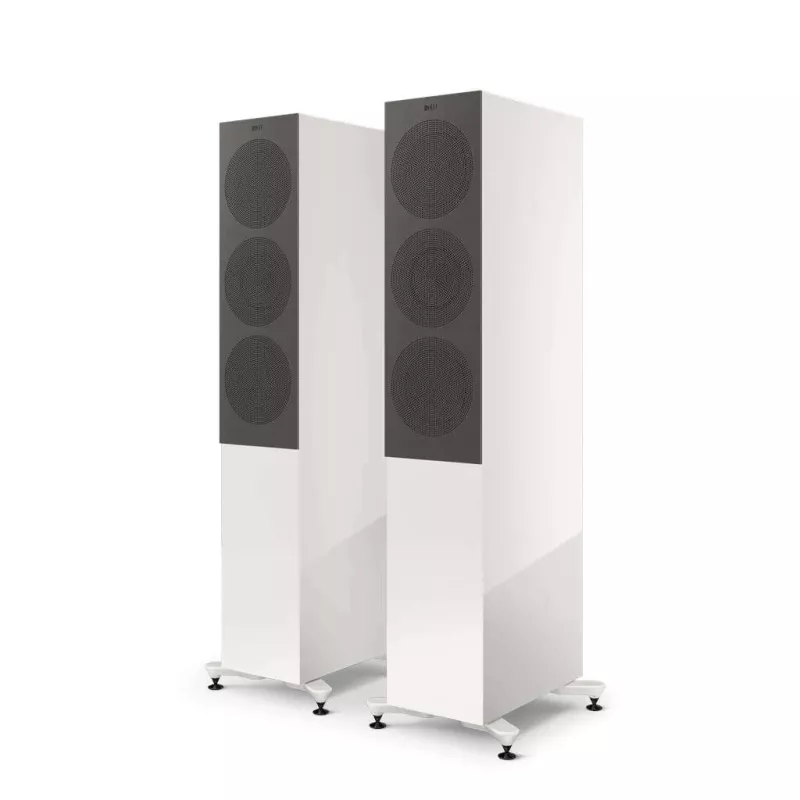
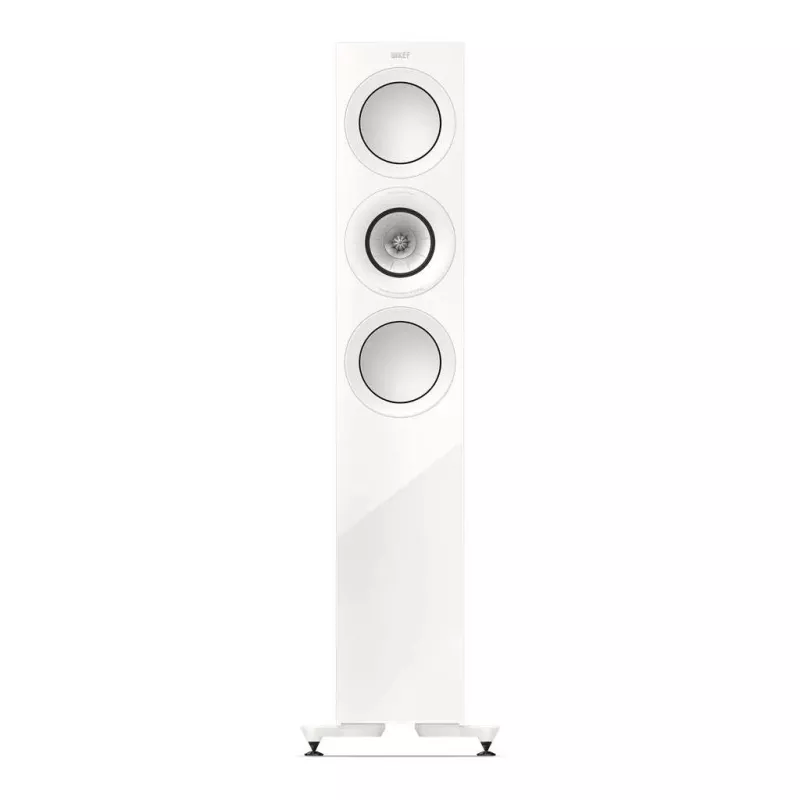
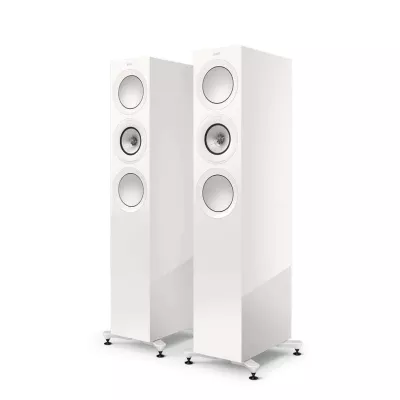
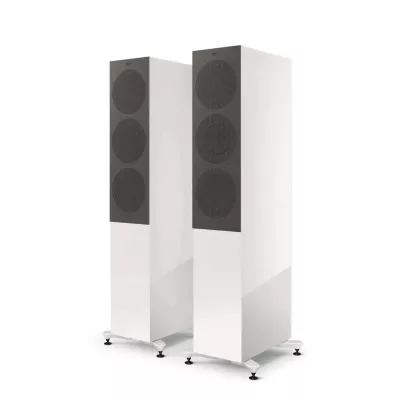
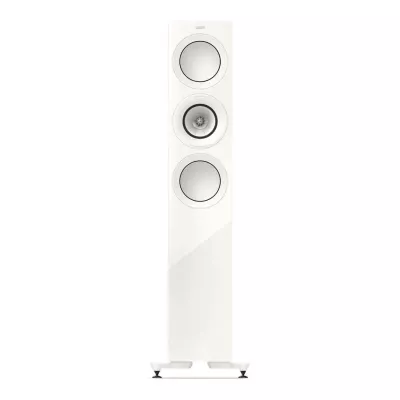
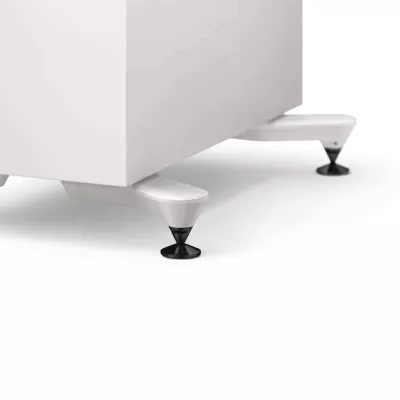


The tweeter radiates as much backwards as forwards. Behind it, a metamaterial disc pierced with channels of differing lengths traps that rear wave and dissipates it as heat: 99% of the high-frequency energy never returns to the cone. What is left is the signal.

Where the R5 works with two 130 mm cones, the R7 goes up to 165. Bass reaches down to 33 Hz at −6 dB and sensitivity gains a decibel, 88 dB. The crossovers sit at 400 Hz and 2.4 kHz.

The Uni-Q keeps the treble and the midrange, the two 165 mm units do the bass only. That separation costs one more crossover, and hands the midrange a cone that does not move under the bass. The band rises to 50 kHz.

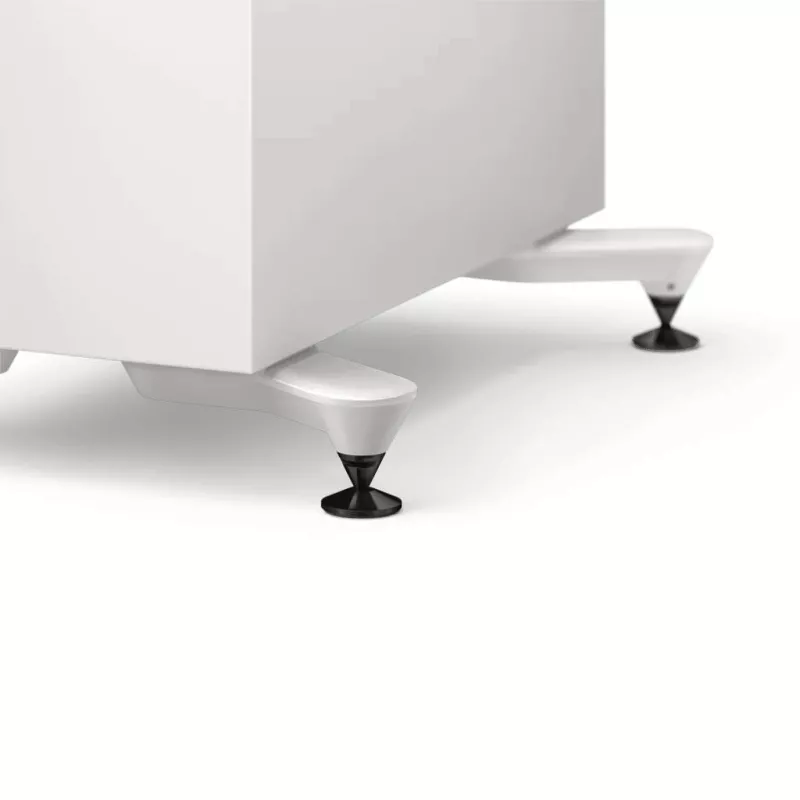
1062 × 200 × 384 mm for 29.3 kg: the R7 Meta asks for 384 mm of depth, to be allowed for in front of the wall. It accepts 15 to 250 W at 4 Ω, 3.2 Ω minimum, and tops out at 111 dB. Three finishes: gloss black, gloss white, walnut, plus a titanium finish.
Data sheet
Specific References
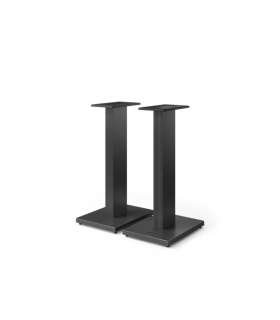
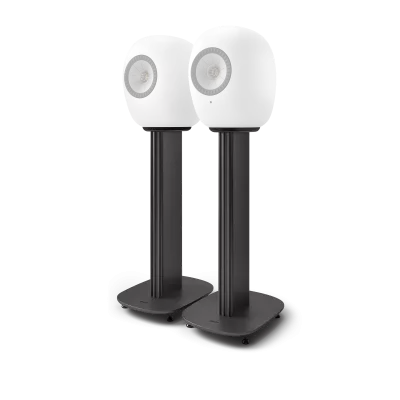
KEF SQ1 aluminium floor stand for the Coda W, Q1 Meta, Q3 Meta and Q Concerto Meta speakers. Fillable column, internal cable routing, sold as a pair.
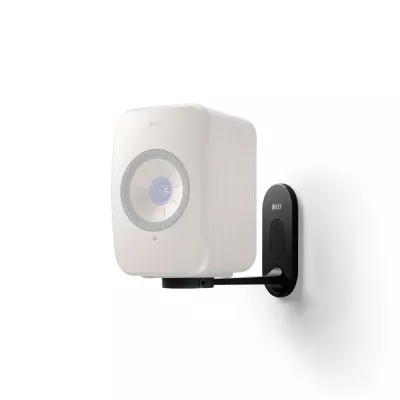
KEF B1 wall mount for LSX, LSX II, LSX II LT speakers. Adjustable tilt 40°, 90° rotation, aluminum construction. Available in Black and Silver. Sold individually.
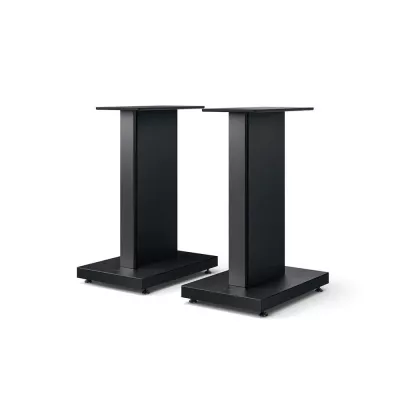
KEF S-RF1 aluminium floor stand for Reference 1 Meta, with speaker cable management routed inside the pillar. Sold individually, in Carbon Black or Mineral White.