
 Français
 Deutsch
 Italiano
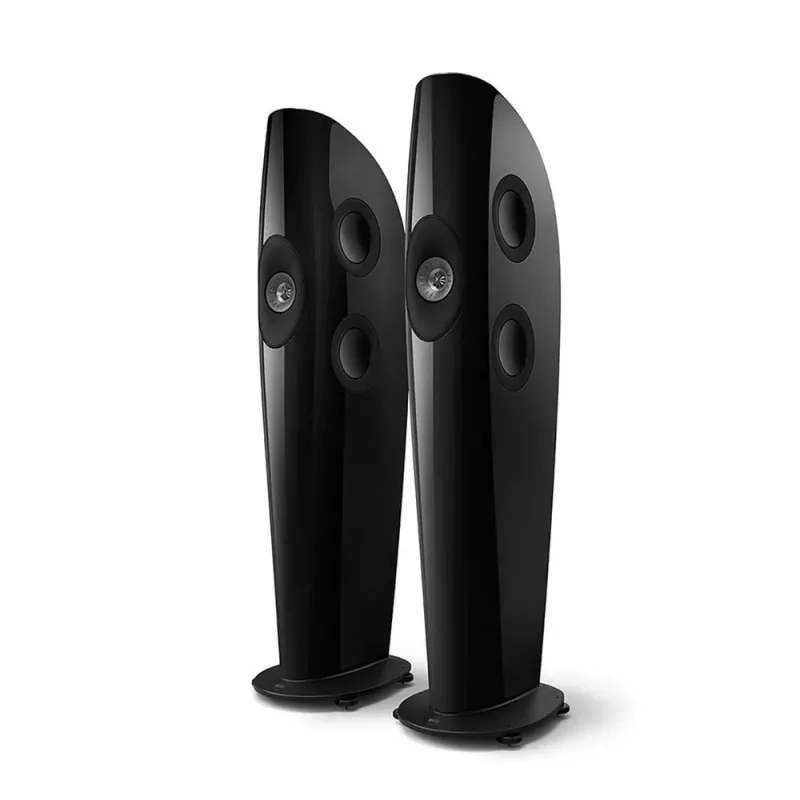
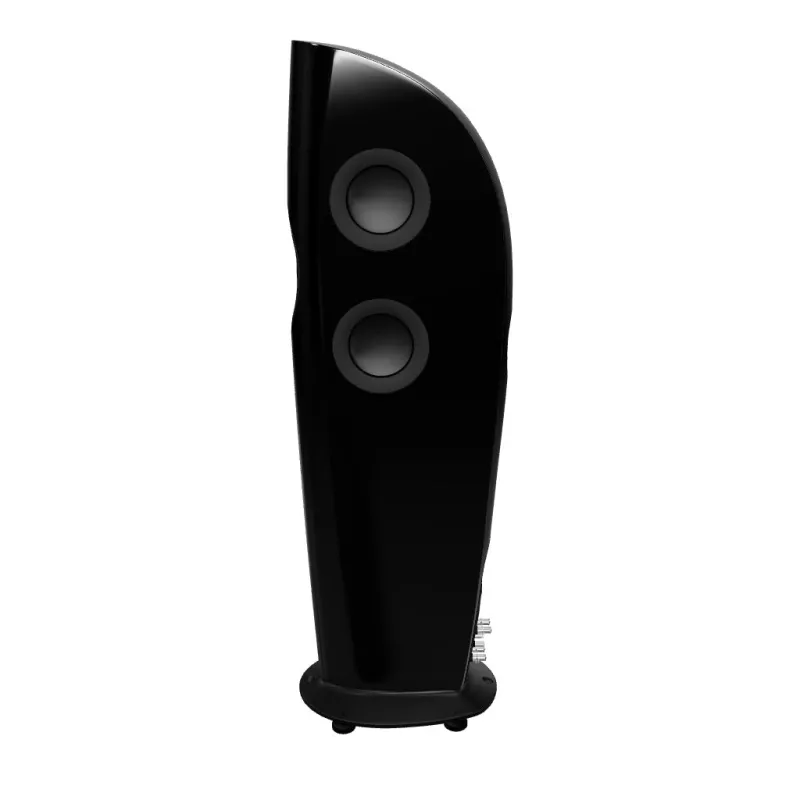


The Blade Two Meta shares the technology and the lines of the Blade One Meta in a slightly smaller body: 146.1 cm tall against 159 cm for the Blade One Meta. Its four bass drivers surround the Uni-Q in opposed pairs, so bass, midrange and treble seem to come from a single point. The image stays precise even off the central axis, across a wider listening area.

The 25 mm aluminium dome of the Uni-Q radiates from the centre of a 125 mm midrange cone, also made of aluminium. Its rear wave runs into the MAT structure, where each channel absorbs one specific frequency, and 99 % of that stray radiation disappears. A decoupled chassis also stops vibrations from the mid and treble motor reaching the cabinet.

Four 165 mm aluminium cones, mounted back to back, cancel out each other's mechanical reactions. Each pair has its own volume, and the crossover, reworked for this version, joins the ways at 450 Hz and 2.2 kHz. You get 33 Hz to 35 kHz within ±3 dB, with a typical in-room extension of 25 Hz.

The cabinet is moulded from an acoustically inert ultra-high-density polyurethane composite, whose parabolic curves avoid standing waves. KEF assembles it by hand in Maidstone, in the United Kingdom. Sensitivity of 86 dB and a 4 Ω load, 3.2 Ω minimum, suit 50 to 400 W, and two pairs of WBT terminals allow bi-wiring and bi-amping.
Data sheet
Specific References
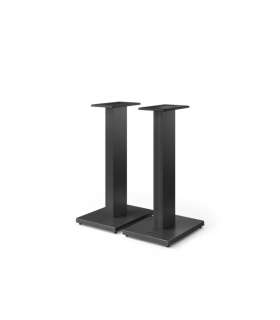
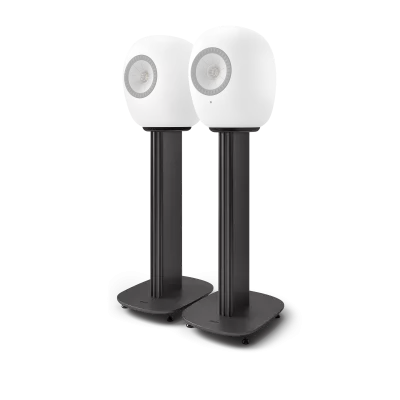
KEF SQ1 aluminium floor stand for the Coda W, Q1 Meta, Q3 Meta and Q Concerto Meta speakers. Fillable column, internal cable routing, sold as a pair.
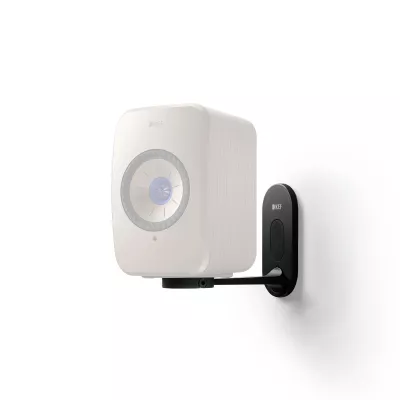
KEF B1 wall mount for LSX, LSX II, LSX II LT speakers. Adjustable tilt 40°, 90° rotation, aluminum construction. Available in Black and Silver. Sold individually.
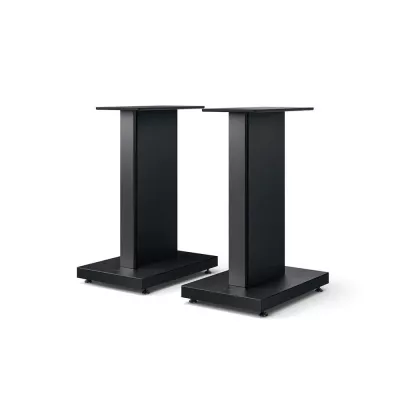
KEF S-RF1 aluminium floor stand for Reference 1 Meta, with speaker cable management routed inside the pillar. Sold individually, in Carbon Black or Mineral White.